
 By
By 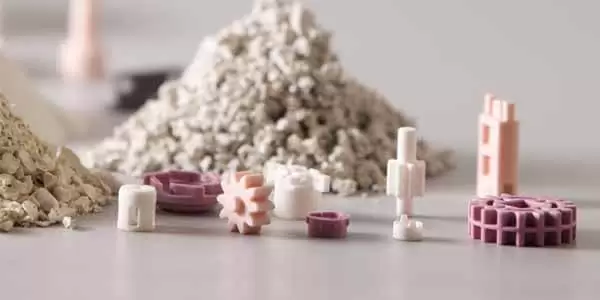
Introduction
Ceramic injection molding sits at a crossroads that every manufacturing engineer eventually reaches: the point where conventional forming methods begin to impose limits that the design simply cannot accommodate. Much like the geographical barriers that shaped the spread of civilisations across continents, the constraints of a manufacturing process shape what is possible, what is economical, and ultimately what gets built. Understanding when ceramic injection moulding is the right choice, and when it is not, requires an honest comparison with the alternatives that have served the ceramics industry for decades.
The Landscape of Ceramic Forming Methods
Before any meaningful comparison can be made, it helps to understand what the alternatives actually are. The ceramics industry draws on a range of established forming techniques, each with its own strengths, limitations, and natural domains of application.
Dry pressing
Ceramic powder is compacted under high pressure in a rigid die. Fast, economical, and well-suited to simple geometries such as flat discs, cylinders, and tiles
Isostatic pressing
Pressure is applied uniformly from all directions using a flexible membrane, allowing for more complex shapes than uniaxial pressing but still constrained in geometric intricacy
Slip casting
A liquid ceramic suspension is poured into a porous mould that absorbs water, leaving a green ceramic shell. Useful for hollow forms but slow and difficult to scale
Extrusion
Ceramic paste is forced through a die to produce continuous profiles. Effective for tubes, rods, and honeycomb structures but limited to uniform cross-sections
Machining of pre-sintered blanks
Green or bisque-fired ceramic blocks are machined to shape before final sintering. Flexible but expensive and associated with significant material waste
Each of these methods has earned its place in the manufacturing toolkit. The question is not whether they work, but whether they work for the specific problem at hand.
Where Ceramic Injection Moulding Differs
Ceramic injection moulding introduces a fundamentally different relationship between design complexity and production cost. In most conventional forming methods, geometric complexity increases cost in a roughly linear fashion. Every undercut, internal channel, or asymmetric feature demands either additional tooling, secondary operations, or manual intervention.
In ceramic injection molding, complexity is largely absorbed into the mould. Once the mould is designed and validated, the process reproduces that complexity identically across thousands of parts with no additional cost per feature. This is the central economic logic of the process: high upfront tooling investment, low per-part cost at volume.
The implications are significant:
- Internal geometries, including channels, threads, and blind holes, are achievable without secondary machining
- Wall thicknesses as low as 0.3 millimetres can be maintained with consistency
- Multi-feature components that would require assembly from several pressed or cast parts can be produced as a single piece
- Surface finish quality reduces or eliminates the need for post-sintering grinding
When Ceramic Injection Molding Is the Right Choice
The process earns its place when several conditions converge. The geometry must justify it: components with complex three-dimensional features, tight tolerances, and demanding surface requirements are natural candidates. The volume must support it: the tooling investment typically becomes economically rational at production runs of several thousand units or more. And the material must require it: applications demanding the full density and mechanical integrity of sintered ceramic, rather than the surface properties of a coated or composite part.
Medical device manufacturing provides a strong example. Surgical instrument components and implantable parts often require biocompatible ceramics such as zirconia, produced to tolerances that pressed or cast methods cannot reliably achieve at the miniature scale involved. Singapore’s precision medical manufacturing sector has adopted ceramic injection moulding as a preferred route for exactly these reasons, supported by clean room infrastructure and quality systems aligned to ISO 13485 requirements.
Semiconductor fabrication equipment offers another clear application domain. Components operating within plasma environments or under extreme thermal cycling need the combination of chemical inertness, hardness, and dimensional stability that only fully dense technical ceramics provide. Ceramic injection moulded parts serve this need with a level of geometric precision that machining from pressed blanks cannot match at comparable cost.
When the Alternatives Make More Sense
Ceramic injection moulding is not the universal answer. Several scenarios favour the alternatives.
For simple geometries at high volume, dry pressing remains faster and less capital-intensive. Structural insulators, wear plates, and standard substrates are better served by pressing than by the added complexity of feedstock preparation, debinding, and sintering schedule management that ceramic injection moulding demands.
For very low production volumes or one-off prototypes, machining from pre-sintered blanks may be more economical despite higher per-part costs, simply because tooling is not required. The break-even point between machining and ceramic injection molding depends on part complexity and volume, but for runs below a few hundred units, the economics often favour machining.
For large structural components, isostatic pressing or slip casting may offer better material uniformity across the cross-section than injection moulding, where binder distribution and flow dynamics can introduce density gradients in thick sections.
Making the Decision
The most useful framework for choosing between ceramic injection moulding and its alternatives asks three questions in sequence. Is the geometry too complex for pressing or casting? Is the volume sufficient to amortise tooling costs? Does the application demand the material density and dimensional precision that only ceramic injection moulding reliably delivers?
When all three answers point in the same direction, the decision is straightforward. When they diverge, the work of engineering begins: weighing cost against capability, volume against complexity, and short-term economics against long-term production reliability. It is precisely the kind of reasoning that has driven ceramic injection moulding from a specialist niche into one of the defining processes of precision manufacturing, from Singapore’s advanced fabrication facilities to the most demanding component applications in the world.





Comments